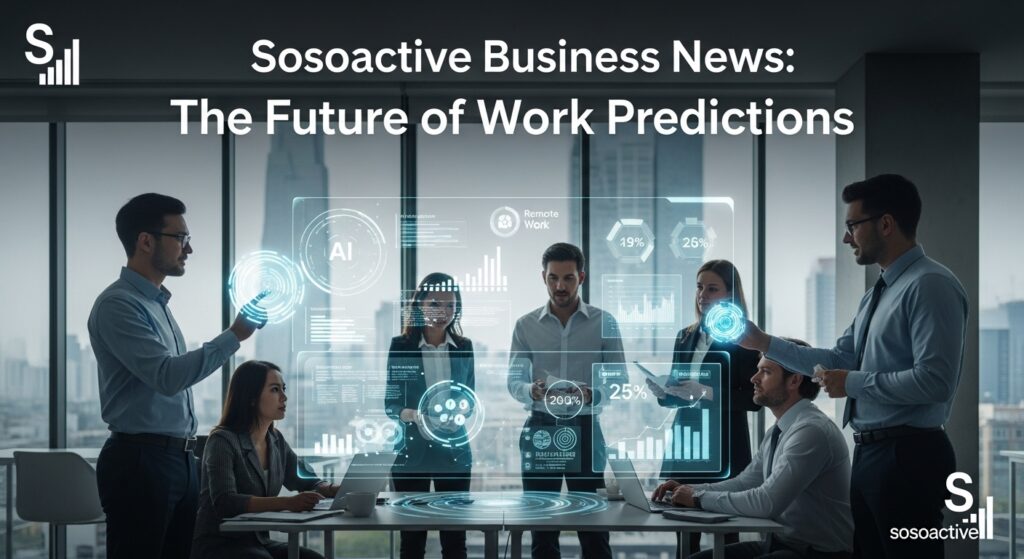
Sosoactive Business News has emerged as a trusted source for understanding how global business trends are reshaping industries, careers, and organizational structures. As workplaces evolve at an unprecedented pace, insights from reliable business journalism are becoming essential for professionals, entrepreneurs, and decision-makers. The future of work is no longer a distant concept; it is unfolding in real time through digital transformation, shifting workforce expectations, and technological innovation. By examining future-focused predictions highlighted by Sosoactive Business News, we gain a clearer picture of how work will be defined in the coming years.
The modern workforce is experiencing a fundamental transition driven by automation, remote collaboration, and changing economic priorities. Companies are rethinking how they hire, manage, and retain talent, while employees are redefining what meaningful work looks like. These changes are not temporary responses to global disruptions but long-term shifts that will continue to shape business ecosystems worldwide.
The Role of Sosoactive Business News in Work Trend Analysis
Sosoactive Business News plays a significant role in interpreting complex labor market changes and translating them into actionable insights. Through in-depth reporting, expert commentary, and data-driven analysis, the platform bridges the gap between emerging trends and real-world business decisions.
Its coverage goes beyond surface-level reporting by connecting workforce changes to broader economic and technological developments. This approach allows readers to understand not only what is changing but why those changes matter. As businesses navigate uncertainty, such informed perspectives help leaders stay ahead of disruption rather than react to it.
Digital Transformation and the Redefinition of Workspaces
The digital revolution has permanently altered where and how people work. Traditional office environments are no longer the default model for productivity. Instead, cloud-based tools, virtual communication platforms, and AI-powered systems are enabling seamless collaboration across borders.
Digital workspaces are becoming more personalized, flexible, and data-driven. Employees can now access systems securely from anywhere, while employers gain real-time visibility into performance metrics. This transformation is not just about convenience; it represents a strategic shift toward efficiency and scalability.
Comparison of Traditional and Digital Work Models
| Aspect | Traditional Work Model | Digital Work Model |
|---|---|---|
| Work Location | Centralized offices | Remote and hybrid |
| Collaboration | In-person meetings | Virtual collaboration tools |
| Productivity Measurement | Hours worked | Output and outcomes |
| Technology Dependence | Moderate | High |
| Scalability | Limited | Highly scalable |
This evolution highlights why digital fluency is becoming a core competency across industries.
Remote and Hybrid Work as the New Normal
Remote and hybrid work arrangements have transitioned from temporary solutions to permanent strategies. Organizations now recognize that flexibility can improve employee satisfaction while reducing operational costs. Employees benefit from reduced commuting time and improved work-life balance, while companies gain access to global talent pools.
Hybrid models, combining remote and in-office work, are emerging as a balanced approach. They allow teams to maintain human connection without sacrificing flexibility. This shift requires new management practices focused on trust, communication, and results rather than physical presence.
Artificial Intelligence and Automation in the Workplace
Artificial intelligence is no longer confined to experimental use cases. It is actively reshaping job roles, workflows, and decision-making processes. Automation is handling repetitive tasks, freeing human workers to focus on creative, strategic, and interpersonal responsibilities.
While concerns about job displacement persist, the broader narrative points toward job transformation rather than elimination. New roles are emerging in data analysis, AI oversight, and digital strategy. The challenge for organizations is to reskill employees and integrate intelligent systems responsibly.
Impact of AI on Job Functions
| Job Area | Traditional Focus | AI-Enhanced Focus |
|---|---|---|
| Customer Support | Manual responses | AI-assisted interactions |
| Data Analysis | Spreadsheet analysis | Predictive insights |
| Human Resources | Administrative tasks | Talent analytics |
| Marketing | Manual campaigns | Personalized automation |
These changes demonstrate how technology augments human capability rather than replacing it entirely.
Skills of the Future Workforce
As job roles evolve, so do skill requirements. Technical skills such as data literacy, cybersecurity awareness, and digital collaboration are becoming essential across industries. At the same time, soft skills like adaptability, emotional intelligence, and critical thinking are gaining increased importance.
Lifelong learning is no longer optional. Professionals must continuously update their skill sets to remain relevant. Employers are responding by investing in training programs, online learning platforms, and internal knowledge-sharing initiatives.
Workforce Diversity and Inclusion as Strategic Priorities
Diversity and inclusion are no longer viewed as optional corporate values. They are increasingly recognized as drivers of innovation and performance. Diverse teams bring varied perspectives that enhance problem-solving and creativity.
Future-focused organizations are embedding inclusion into their hiring practices, leadership development, and workplace culture. This shift reflects a broader understanding that equitable workplaces are more resilient and adaptable in times of change.
Employee Well-Being and Mental Health Awareness
The future of work places greater emphasis on employee well-being. Burnout, stress, and mental health challenges have become critical concerns as boundaries between work and personal life blur. Companies are responding by introducing wellness programs, flexible schedules, and mental health resources.
This focus represents a cultural shift toward treating employees as whole individuals rather than productivity units. Organizations that prioritize well-being are more likely to retain talent and sustain long-term performance.
The Gig Economy and Flexible Employment Models
Flexible employment models are redefining traditional career paths. Freelancing, contract work, and project-based roles are becoming more common as workers seek autonomy and organizations pursue agility. The gig economy offers opportunities for specialized expertise while reducing long-term commitments.
However, this shift also raises questions about job security, benefits, and labor protections. Policymakers and businesses must collaborate to create frameworks that balance flexibility with fairness.
Leadership Evolution in the Future Workplace
Leadership styles are evolving alongside workforce expectations. Command-and-control management approaches are giving way to collaborative and empathetic leadership. Future leaders must navigate complexity, inspire trust, and manage distributed teams effectively.
Transparent communication, adaptability, and ethical decision-making are becoming defining leadership traits. Organizations that cultivate such leadership are better positioned to thrive in uncertain environments.
Economic Implications of Work Transformation
The transformation of work has far-reaching economic implications. Productivity gains from automation and digitalization can drive economic growth, but uneven adoption may widen inequality. Regions and industries that adapt quickly are likely to benefit more than those that lag behind.
Strategic investment in education, infrastructure, and innovation will be essential to ensure inclusive growth. Governments and businesses alike play a role in shaping equitable outcomes.
Globalization and Cross-Border Collaboration
Advancements in communication technology are enabling seamless cross-border collaboration. Teams can now operate across time zones and cultures with minimal friction. This globalization of work expands opportunities but also requires cultural sensitivity and effective coordination.
Organizations that master global collaboration gain access to diverse perspectives and emerging markets, strengthening their competitive position.
Sustainability and the Future of Work Practices
Sustainability considerations are influencing workplace design and operational decisions. Remote work reduces carbon emissions associated with commuting, while digital workflows minimize paper consumption. Companies are aligning work practices with environmental goals to meet stakeholder expectations.
Sustainable work models not only benefit the planet but also enhance brand reputation and employee engagement.
How Businesses Can Prepare for the Future of Work
Preparation requires proactive strategy rather than reactive change. Businesses must assess emerging trends, invest in technology, and prioritize workforce development. Scenario planning and continuous learning help organizations remain resilient in dynamic environments.
Collaboration between leadership, employees, and external partners is key to navigating transformation successfully.
The Long-Term Outlook According to Sosoactive Business News
Insights from Sosoactive Business News suggest that the future of work will be defined by flexibility, technology integration, and human centric values. Organizations that embrace change while maintaining ethical and inclusive practices will be best positioned for sustainable success.
The workplace of tomorrow will not be shaped by a single trend but by the interaction of multiple forces. Understanding these dynamics empowers businesses and professionals to make informed decisions in an evolving landscape.
Conclusion
The future of work represents a profound shift in how value is created, measured, and sustained. From digital transformation and AI adoption to evolving leadership and employee well-being, every aspect of work is being reimagined. By following insights highlighted through Sosoactive Business News, readers can stay informed about the forces shaping tomorrow’s workforce.
Ultimately, success in the future workplace will depend on adaptability, continuous learning, and a commitment to human-centered progress. Those who understand and embrace these changes today will shape the work environments of tomorrow.