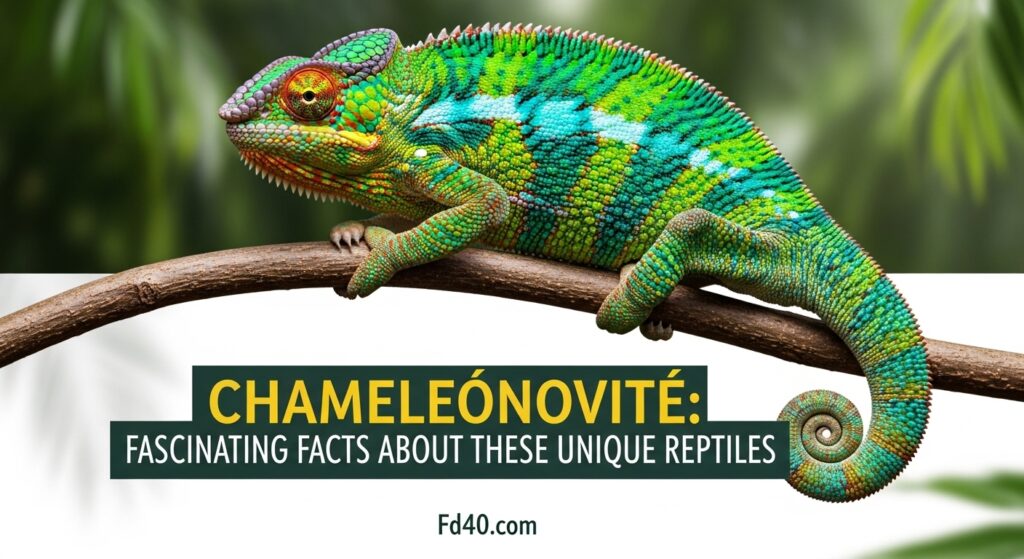
Chameleónovité are among the most intriguing reptiles found in nature, known for their distinctive appearance and extraordinary abilities. These reptiles belong to a specialized family that has fascinated scientists, wildlife enthusiasts, and nature lovers for generations. Their ability to adapt visually to their surroundings has often been misunderstood, yet it remains one of the most remarkable features in the reptile world. Studying these creatures helps researchers better understand animal adaptation and evolutionary biology.
The family of reptiles known as Chameleónovité is primarily found in Africa, Madagascar, parts of Asia, and some regions of southern Europe. Their habitats range from dense rainforests to dry savannas, showing their impressive adaptability to different environments. Over time, these reptiles have evolved specialized body structures that allow them to thrive in arboreal environments where climbing and camouflage are essential for survival.
Evolution and Classification of Chameleónovité
The evolutionary history of Chameleónovité stretches back millions of years, making them one of the most unique reptile families on Earth. Fossil records suggest that early ancestors of these reptiles evolved in Africa and gradually spread to other continents through natural migration. Their evolutionary path is marked by adaptations that allowed them to become highly specialized tree-dwelling reptiles.
From a biological perspective, Chameleónovité belong to the reptile order Squamata, which also includes lizards and snakes. Within this classification, they represent a highly distinct group due to their physical and behavioral traits. Scientists have identified more than 200 species within this family, each displaying subtle variations in size, color, and environmental adaptation.
Physical Characteristics of Chameleónovité
The physical appearance of Chameleónovité makes them instantly recognizable among reptiles. Their bodies are typically laterally compressed, allowing them to move efficiently along branches and narrow surfaces. One of their most distinctive features is the turret-like eyes that can rotate independently, giving them nearly 360-degree vision. This visual advantage helps them detect both predators and prey without moving their heads.
Another remarkable trait of Chameleónovité is their specialized feet and tails. Their feet are structured like grasping tools, enabling them to cling securely to branches and vines. In addition, their tails are prehensile, meaning they can wrap around branches to provide extra support while climbing. These physical adaptations play a crucial role in their arboreal lifestyle and survival strategies.
Color Changing Abilities in Chameleónovité
One of the most famous characteristics of Chameleónovité is their ability to change color. Contrary to popular belief, these reptiles do not primarily change color for camouflage. Instead, color transformation often reflects mood, temperature, light conditions, and communication with other chameleons. This biological process involves specialized cells in the skin known as chromatophores.
The color-shifting ability of Chameleónovité also plays an important role in social interactions. During territorial disputes or mating displays, individuals may exhibit vibrant color patterns to communicate dominance or readiness. This visual signaling system is highly complex and demonstrates how reptiles can evolve advanced communication methods without vocal sounds.
Habitat and Natural Environment of Chameleónovité
The natural habitat of Chameleónovité varies widely depending on the species. Many live in tropical forests where dense vegetation provides both shelter and hunting opportunities. Others inhabit dry woodlands or shrublands where their camouflage abilities help them blend into sparse surroundings. Regardless of the environment, trees and elevated structures remain essential to their daily activities.
Climate conditions also influence the distribution of Chameleónovité populations. Warm temperatures and moderate humidity support their metabolic processes and reproductive cycles. In regions where seasonal changes occur, these reptiles often adjust their behavior by seeking shade or sunlight to regulate body temperature, demonstrating their remarkable environmental awareness.
Feeding Behavior of Chameleónovité
Chameleónovité are primarily insectivorous reptiles, meaning their diet consists mainly of insects and small invertebrates. Their hunting technique is highly specialized and relies on patience and precision. A chameleon can remain motionless for extended periods before striking its prey with an incredibly fast tongue that can extend several times the length of its body.
The feeding strategy of Chameleónovité is supported by their exceptional vision. Their independently moving eyes allow them to focus on prey while simultaneously monitoring their surroundings for potential threats. This dual observation capability ensures that they remain effective hunters while avoiding predators in their natural environment.
Table: Common Food Sources of Chameleónovité
| Food Type | Description | Nutritional Value |
|---|---|---|
| Crickets | A primary insect prey for many species | High protein |
| Grasshoppers | Common in wild habitats | Rich in nutrients |
| Beetles | Hard-shelled insects often consumed | Provides minerals |
| Caterpillars | Soft-bodied larvae | Easy digestion |
| Small spiders | Occasionally hunted | Additional protein |
Reproduction and Life Cycle of Chameleónovité
Reproduction among Chameleónovité varies depending on species and environmental conditions. Many species lay eggs, while some give birth to live young. Egg-laying females typically dig small holes in the soil where they deposit their eggs before covering them carefully. This process helps protect the developing embryos from predators and environmental hazards.
The incubation period for Chameleónovité eggs can range from several months to over a year. Once the hatchlings emerge, they are fully independent and must immediately begin searching for food and shelter. Unlike many other reptiles, parental care is generally absent, meaning survival depends entirely on the young reptile’s instincts and ability to adapt quickly.
Table: Life Cycle Stages of Chameleónovité
| Life Stage | Description | Approximate Duration |
|---|---|---|
| Egg | Embryonic development inside protective shell | 4–12 months |
| Hatchling | Newly emerged young reptile | First weeks |
| Juvenile | Growing stage with increasing independence | Several months |
| Adult | Fully mature reproductive stage | 2–10 years |
Unique Vision and Sensory Abilities of Chameleónovité
The visual system of Chameleónovité is considered one of the most advanced among reptiles. Each eye can move independently, allowing them to observe two different directions at the same time. When prey is detected, both eyes focus simultaneously to create precise depth perception before the hunting strike.
In addition to their remarkable eyesight, Chameleónovité rely on subtle environmental cues to detect movement and changes in light. Their sensory awareness helps them remain alert in complex forest environments where predators and prey are constantly moving. These abilities highlight the evolutionary sophistication of these reptiles.
Conservation and Protection of Chameleónovité
Many species within the Chameleónovité family face environmental threats due to habitat loss, climate change, and illegal wildlife trade. Forest destruction, particularly in Madagascar, has significantly reduced the natural habitats available for these reptiles. As a result, several species are now considered endangered or vulnerable.
Conservation programs aim to protect Chameleónovité by preserving forests and regulating wildlife trade. Researchers and environmental organizations are working to study their populations and raise awareness about their ecological importance. Protecting these reptiles also helps maintain biodiversity in the ecosystems where they live.
Table: Major Threats to Chameleónovité
| Threat | Impact | Conservation Effort |
|---|---|---|
| Habitat loss | Reduces natural living spaces | Forest protection |
| Climate change | Alters environmental conditions | Climate research |
| Illegal trade | Removes reptiles from wild populations | Wildlife regulations |
| Pollution | Damages ecosystems | Environmental protection |
The Role of Chameleónovité in Ecosystems
Chameleónovité play a significant role in maintaining ecological balance within their habitats. By feeding on insects and other small invertebrates, they help regulate populations that could otherwise become harmful to plants and crops. Their presence contributes to the stability of food chains in forest and woodland environments.
At the same time, Chameleónovité serve as prey for larger animals such as birds and snakes. This relationship ensures energy transfer throughout the ecosystem and highlights their importance within natural food webs. Their survival therefore influences the health and diversity of many ecosystems worldwide.
Conclusion
The fascinating world of Chameleónovité demonstrates how evolution can produce extraordinary adaptations that allow animals to thrive in complex environments. From their color-changing skin to their advanced visual systems, these reptiles represent one of nature’s most remarkable examples of biological specialization. Their behaviors and physical characteristics continue to inspire scientific research and public curiosity.
Protecting Chameleónovité is essential for preserving biodiversity and maintaining ecological balance in the regions where they live. By understanding their role in nature and supporting conservation efforts, humans can ensure that future generations will continue to learn from and admire these extraordinary reptiles.